
Thinking about solar in Arizona? The rules you interconnect under, the rate plan you pick, and the incentives you claim will shape your savings for years. This guide gives homeowners—and small commercial customers—a clear, current roadmap.
1) What’s changing in Arizona policy & utility rates (2025)
ACC renewable standard (context): Arizona’s Renewable Energy Standard requires regulated utilities to supply 15% of electricity from renewables by 2025, with a carve-out for distributed generation. That mandate underpins many utility programs you’ll see referenced below.
APS (Arizona Public Service):
- Arizona’s solar export credit (the Resource Comparison Proxy, or RCP) sets what APS pays for excess solar sent to the grid. The ACC approved APS’s 2025 RCP update, which lowers export compensation vs. prior years. If you’re “grandfathered,” special lock-in rules may apply (see APS tariff). New customers receive the current year’s RCP rate.
SRP (Salt River Project):
- SRP approved an overall 2.4% rate increase effective with November 2025 bills and announced which legacy residential plans freeze in November 2025. Importantly, SRP’s solar-compatible plans (E-13, E-14, E-15, E-27) remain open until November 2029. Customers planning rooftop solar should select among these export/demand plans.
TEP (Tucson Electric Power):
- TEP follows the ACC’s distributed generation interconnection rules (DGIR) and runs interconnection through its online PowerClerk portal (details in Section 3 below).
Takeaway: Export credits (APS) and plan availability (SRP) are moving targets. Locking your project and plan choice sooner can preserve better economics.
2) Local permitting: what cities & counties actually require
Permitting is local. In metro Phoenix, two common authorities are the City of Phoenix and Maricopa County (for unincorporated areas). Here’s how it typically works:
City of Phoenix (examples):
- SolarAPP+ available for eligible residential PV—fast-tracks code compliance; separate Phoenix Fire Department permit is required for PV and battery systems.
- The city publishes solar-specific guidance and fee schedules (e.g., “Residential Solar Photovoltaic System Permit”) and notes email intake for PV submissions.
Maricopa County (unincorporated):
- Online solar permits are available via the county’s Permit Center (launched 2024). The Planning & Development site centralizes rules, code references, and permit actions.
Typical homeowner paperwork (we handle this):
- Site plan & structural info (roof layout, attachment details)
- Electrical single-line diagram & spec sheets
- Local permit application(s) + fire permit if required
- Utility interconnection application (see next section)
3) Interconnection: APS, SRP, and TEP—what to expect
APS:
- APS maintains published Interconnection Requirements and a homeowner-facing “Your Journey to Adding Rooftop Solar” page. Expect submittals (site plan, 3-line diagram, authorization), utility review, Permission to Operate (PTO), and a meter swap if needed.
SRP:
- SRP offers contractor resources plus plan specifics for customer-generation/export plans (E-13/E-14/E-15/E-27). Choosing the right SRP plan is critical to bill outcomes.
TEP:
- Residential interconnection runs through PowerClerk with installer uploads (photos, documents) and TEP engineering review under the ACC’s DGIR rules.
Pro tip: Interconnection approval is separate from city/county permits. Sequencing and completeness matter—our team manages both tracks in parallel to shorten timelines.
4) Incentives & tax credits available in Arizona (2025)
Federal Residential Clean Energy Credit (IRC § 25D) — Final Window
- Under the federal Residential Clean Energy Credit, homeowners can claim 30% of the cost of qualified solar, battery, geothermal, or other clean energy systems installed in their home.

- In July 2025, Congress passed legislation that accelerates the sunset of this credit: it will expire for residential projects placed in service after December 31, 2025.
- That means to claim this 30% credit, your system must be fully installed, inspected, and energized (i.e. “placed in service”) by December 31, 2025.
- Unused portions of the credit (if your tax liability is lower than the credit) may be carried forward to future tax years.
- Important nuance: this accelerated sunset applies only to residential clean energy credits. Commercial, utility, or industrial clean energy tax incentives may follow different phase-out timelines.
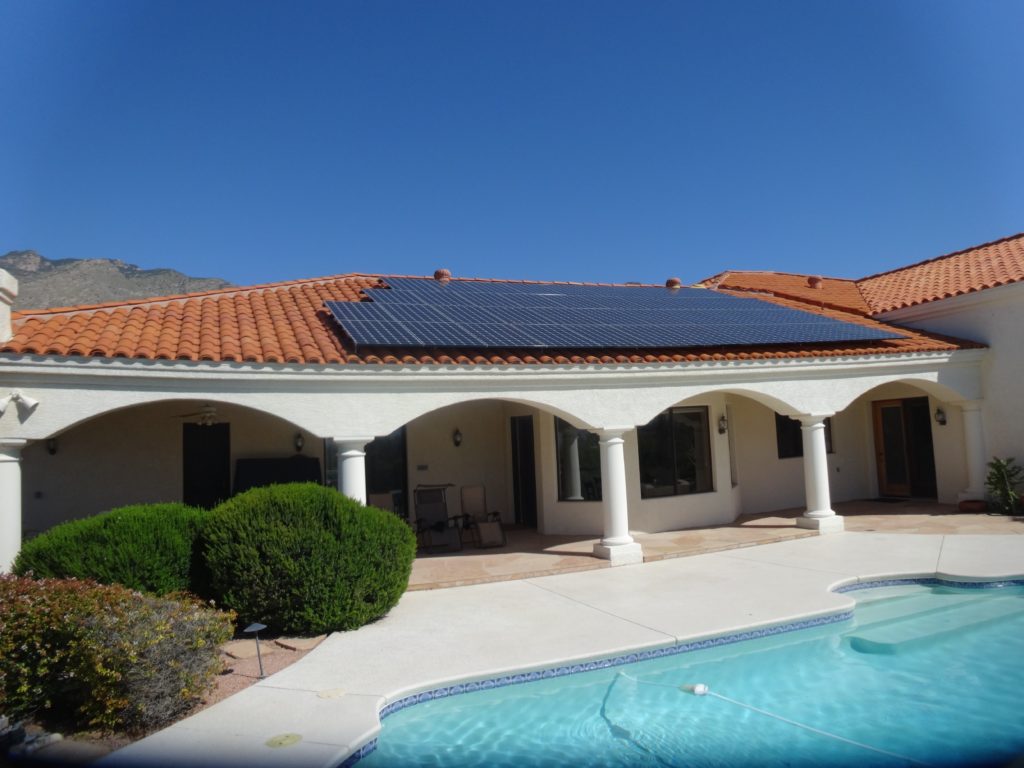
Arizona State Solar & Wind Energy Systems Tax Credit
- Arizona still offers a state income tax credit for residential solar and wind systems: equal to 25% of the cost, up to a $1,000 maximum. If the credit exceeds your Arizona state income tax due, the unused portion may be carried forward for up to five years.
- As of the latest published info (2024–2025), this state credit does not have a specified expiration date.
- To claim it, you must file Arizona Form 310 along with documentation of qualifying system costs and certification of installation
Arizona Sales & Property Tax Treatment
- Sales tax exemption: Arizona exempts the retail sale of solar devices and the installation labor for qualifying systems from sales tax.
- Property tax exemption: The added value of a solar system is not counted toward property tax assessment—i.e. your home’s value increase from a PV system is exempt.
Stacking example: A $25,000 rooftop system could be eligible for a $7,500 federal credit (30%) plus up to $1,000 AZ credit, with no sales tax applied to equipment/installation and no property-tax hit for the PV system value. (Individual results vary—ask your CPA.)
5) Step-by-step: from contract to Permission to Operate (PTO)
- Site audit & design → Structural & electrical plans
- Permit submittals → City/County (e.g., Phoenix SolarAPP+ + Fire)
- Utility interconnection application → APS/SRP/TEP (we submit)
- Install → City/County inspections; corrections if any
- Utility inspection / meter work → PTO granted
- Activate monitoring & pick the optimal rate plan (export/TOU/demand as applicable) → We’ll walk you through APS RCP expectations or SRP solar-compatible plans.
6) Rate-plan & export-credit tips
- APS customers: Your export credits are paid at the annual RCP rate, which adjusts year to year for new interconnections. Being early in the calendar can matter if a future filing reduces rates.
- SRP customers: Choose from E-13/E-14/E-15/E-27 (open through Nov 2029). If you’re on a legacy plan that freezes in Nov 2025, review options now.
- TEP customers: Ensure the selected plan pairs well with your battery strategy and TOU windows; TEP’s DGIR framework governs interconnection safety and performance.
7) What Advanced Electric & Solar handles for you
- Design & engineering compliant with local codes
- Permit & Fire submittals (Phoenix/Maricopa and other AHJs)
- Utility interconnection (APS/SRP/TEP) through the right portals with complete packages
- Rate-plan coaching tailored to your usage (export, TOU, demand) with current rule changes top of mind
- Incentive guidance (we’ll coordinate documentation; always confirm with your tax professional)
.

Monday - Friday 7AM to 5PM
Saturday - by appointment only
We proudly serve Green Valley, Marana, Oro Valley, Saddlebrooke, Sahuarita, Tucson, Vail, and the surrounding areas.